
Marketing has never been easier to attempt.
Today, almost anyone can put together an Instagram post, run a Meta ad campaign, write a blog, or whip up visuals using AI, all within minutes. The tools we have now are faster, more affordable, and far more powerful than what marketers had access to just a few years ago.
But here’s the irony: even with all this technology at their fingertips, most brands still can’t create marketing that actually sticks in people’s minds. Their content gets seen, maybe even liked but it doesn’t get remembered.
The real issue isn’t a shortage of creative ideas. It’s a shortage of creative thinking, the strategic insight that connects a brand to what people genuinely care about.
This is exactly where working with the Best Freelance Digital Marketer in Ernakulam makes a real difference. It’s not about having more tools or fancier designs, it’s about understanding the human being on the other side of the screen, and building marketing that speaks to them, not just at them.
What Is Creative Strategy?
Many people confuse creative strategy with simply “coming up with ideas.”
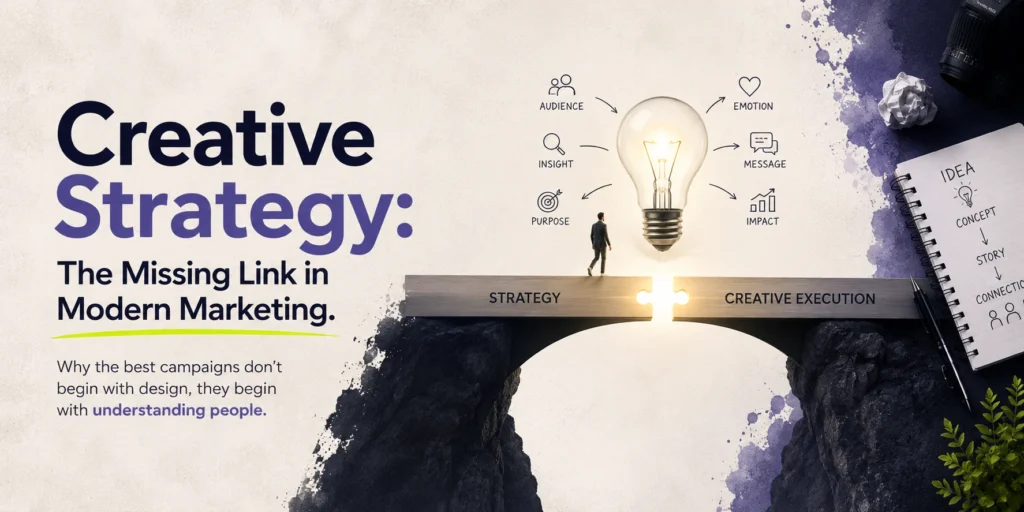
In reality, creative strategy is the bridge between business goals and creative execution.
It answers questions like
* Who are we trying to reach?
* What motivates them?
* What problem are we solving?
* Why should they care?
* What emotion should they feel?
* What action should they take?
Once those questions are answered, design, copywriting, videos, and advertising become much more effective.
Without strategy, creativity is often just decoration.
Why Great Designs Still Fail
Have you ever seen a beautifully designed advertisement that made you feel nothing?
Or a visually stunning website that left you confused about what the company actually does?
Good design captures attention.
Good strategy gives attention a purpose.
The most successful campaigns aren’t remembered because they looked beautiful. They’re remembered because they communicated something meaningful.
Consider the advertisements, companies, or campaigns that have stuck with you throughout the years.
You probably don’t remember the font they used.
You remember how they made you feel.
That’s creative strategy at work.
The Biggest Mistake Modern Marketing Makes
Many businesses start with execution.
“We need a logo.”
“We need social media posts.”
“We need a website.”
“We need advertisements.”
Those are deliverables—not strategy.
Why do we need them? is a better question.
Every marketing asset should support a larger business objective.
If it doesn’t, you’re creating content simply because everyone else is.
Creative Strategy Begins With People
Consumers don’t wake up hoping to see another advertisement.
They wake up with problems they want solved.
The role of creative strategy is to understand those problems and communicate solutions in a way that feels authentic.
Before creating anything, successful marketers spend time understanding:
* Customer pain points
* Buying behavior
* Emotional triggers
* Market positioning
* Competitor messaging
* Cultural context
Only then do they begin creating.
The best ideas are rarely random flashes of inspiration.
They’re informed decisions.
Creativity Without Insight Is Guesswork
Imagine trying to hit a target while blindfolded.
You might get lucky once.
But luck isn’t a strategy.
Many brands create content based on assumptions rather than research.
They ask,
“What do we want to say?”
Instead of,
“What does our audience need to hear?”
That small shift changes everything.
Creative strategy turns assumptions into informed decisions.
The Role of Emotion in Marketing
People often believe consumers make rational purchasing decisions.
Research—and everyday experience—suggest otherwise.
We buy because of trust.
Because of identity.
Because of aspiration.
Because something makes us feel understood.
Creative strategy identifies those emotional drivers before a single headline is written.
That’s why two companies selling identical products can achieve completely different results.
One talks about features.
The other narrates a tale that many can relate to.
AI Can Generate Content. It Can’t Replace Strategy.
Artificial intelligence has transformed how marketers work.
It can write articles, generate visuals, suggest headlines, and automate workflows.
But AI doesn’t understand your audience the way a strategist does.
It doesn’t conduct customer interviews.
It doesn’t uncover hidden motivations.
It doesn’t define brand positioning.
It accelerates execution.
It doesn’t replace thinking.
The brands that succeed with AI won’t be the ones producing the most content.
They’ll be the ones using AI to execute a well-defined strategy more efficiently.
What an Effective Creative Strategy Looks Like
A strong creative strategy aligns every marketing effort around a shared direction.
It includes:
* A clearly defined target audience
* Brand positioning that differentiates the business
* Core messaging pillars
* A distinct tone of voice
* Content themes that educate, inspire, or persuade
* A distribution plan across the right channels
* Clear business objectives and measurable outcomes
When these pieces work together, marketing feels consistent rather than scattered.
From Random Posts to a Cohesive Brand
Imagine two businesses.
The first publishes whatever seems popular that week.
One day it’s a trending meme.
Next, it’s a discount offer.
Then a motivational quote.
Every post looks different, sounds different, and serves a different purpose.
The second business publishes content guided by a clear strategy.
Every article reinforces expertise.
Every social post reflects the brand’s personality.
Every campaign supports a larger goal.
Over time, one becomes recognizable.
The other becomes forgettable.
Consistency isn’t just about posting regularly.
It’s about communicating the same promise, values, and message across every touchpoint.
Strategic Thinkers Will Rule the Future of Marketing
As AI automates repetitive tasks and design tools become increasingly accessible, technical execution will become less of a competitive advantage.
Strategic thinking won’t.
Businesses won’t be searching for people who can simply create content.
They’ll look for professionals who can answer questions like the following:
* Why should this campaign exist?
* Who is it really for?
* What business problem does it solve?
* How will success be measured?
Those questions define great creative strategy.
And they separate marketers from strategists.
Final Thoughts
Modern marketing doesn’t need more content.
It needs more clarity.
It doesn’t need more trends.
It needs stronger ideas.
Creative strategy is what transforms a collection of posts into a recognizable brand, isolated campaigns into sustainable growth, and creative work into measurable business results.
Because ultimately, consumers hardly ever recall all a brand says.
They remember how consistently it makes them feel, and that consistency starts with strategy.
Frequently Asked Questions About Creative Strategy
1. What is creative strategy in digital marketing?
Creative strategy is the process of connecting a brand’s business objectives with creative ideas that resonate with its target audience. It involves understanding the audience, identifying their needs and motivations, defining the brand’s positioning, and developing messaging that encourages the desired action.
2. Why is creative strategy important for modern marketing?
Creative strategy gives marketing a clear purpose. Without it, businesses may produce attractive content without knowing whether it supports their goals. A strong creative strategy ensures that content, advertising, branding, and social media work together to build awareness, engagement, and business results.
3. What is the difference between creative strategy and content strategy?
Creative strategy focuses on the big picture—the audience, positioning, core idea, emotional direction, messaging, and business objective. Content strategy focuses more specifically on what content to create, where to distribute it, and how it supports the overall marketing strategy. They work together but serve different purposes.
4. Can AI replace creative strategists?
AI can significantly improve the speed of content creation, research, ideation, and execution, but it doesn’t eliminate the need for strategic thinking. AI can generate content based on instructions, while a strategist determines what the brand should communicate, who it should communicate with, and why that message matters.
5. How does creative strategy help businesses get better results?
A good creative strategy ensures that every marketing activity has a clear purpose. By understanding the audience, developing relevant messaging, and connecting creative execution to measurable business objectives, businesses can reduce wasted marketing efforts and create more meaningful customer experiences.
6. Does every business need a creative strategy?
Yes. The scale of the strategy may differ depending on the business, but every brand benefits from having clarity about its audience, positioning, messaging, and objectives. Even a small business can use creative strategy to ensure that its website, social media, advertising, and other marketing activities communicate a consistent message.
7. How can I develop a creative strategy for my brand?
Start by defining your business objective and identifying your ideal audience. Then research their problems, motivations, buying behaviour, and expectations. From there, establish your positioning, core message, tone of voice, content themes, channels, and measurable goals. The strategy should ultimately connect creative ideas with a specific business outcome.
8. How can a freelance digital marketer help with creative strategy?
A freelance digital marketer can bring together audience research, brand positioning, content strategy, social media, SEO, advertising, and creative execution under one strategic direction. This can help businesses avoid disconnected marketing activities and build a more consistent brand presence across digital channels.