The first impression rarely happens in person anymore.
It happens when someone lands on your website.
Within seconds, visitors begin forming opinions about your business. They aren’t just judging the design—they’re asking themselves questions. Can I trust this brand? Does it understand my needs? Is it worth my time? The answers are often decided long before they read a single paragraph.
That’s why I believe a website should never be treated as a digital brochure. It should function as your hardest-working business asset—one that communicates, convinces, and converts, even while you’re offline.
Too often, businesses approach website development as a checklist. Choose a template. Add a few pages. Publish. But a successful website isn’t built by assembling sections. It’s built by understanding people. Every layout, headline, interaction, and call-to-action should guide visitors toward a clear next step. Good design catches attention. Great strategy keeps people moving.
The most effective websites don’t overwhelm visitors with information. They remove uncertainty. They answer questions before they’re asked, tell a compelling story, and make every click feel intentional. Simplicity isn’t about saying less—it’s about saying the right things in the right order.
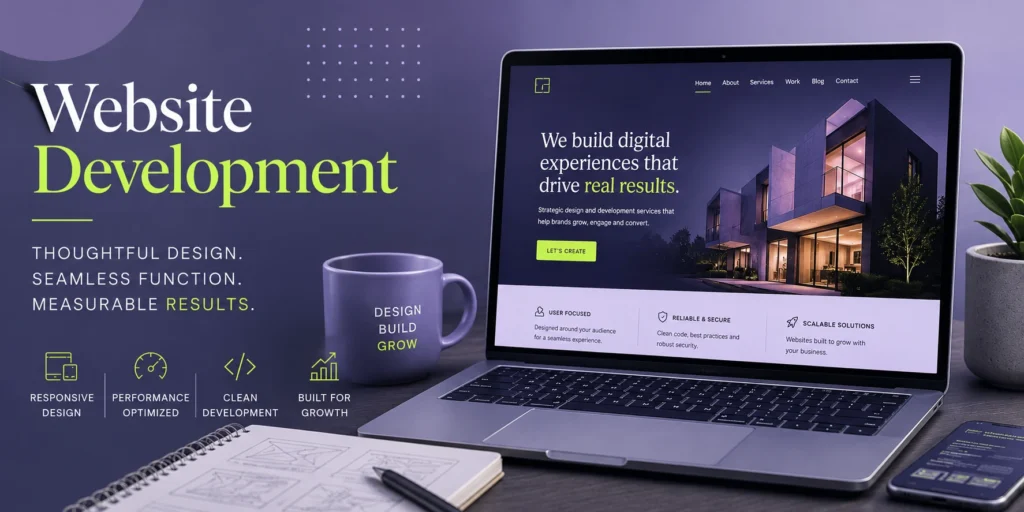
Performance matters just as much as aesthetics. A slow-loading website can cost attention before the conversation even begins. Responsive design, accessibility, intuitive navigation, and search engine optimization are no longer optional features; they’re the foundation of a modern digital experience. Behind every beautiful interface should be thoughtful structure and seamless functionality.
As a Creative Strategist, I see website development as the intersection of branding, user experience, and business goals. A website shouldn’t simply reflect your brand—it should actively strengthen it. Every visual element, every line of copy, and every interaction should reinforce the story your brand wants to tell.
Technology will continue to evolve. Design trends will come and go. But one principle remains constant: people choose experiences that make their decisions easier. Businesses that prioritize clarity over complexity build stronger relationships and earn greater trust.
A website isn’t finished when it’s launched. It’s an evolving platform that grows alongside your business, adapting to new audiences, new opportunities, and changing customer expectations. The most successful brands understand that continuous improvement is part of the strategy, not an afterthought.
Your website isn’t just where people find your business.
It’s where they decide whether they believe in it.